

Managing a building the size of IKEA Băneasa without real on-site data means risk: errors, delays, and costs that quickly get out of control.
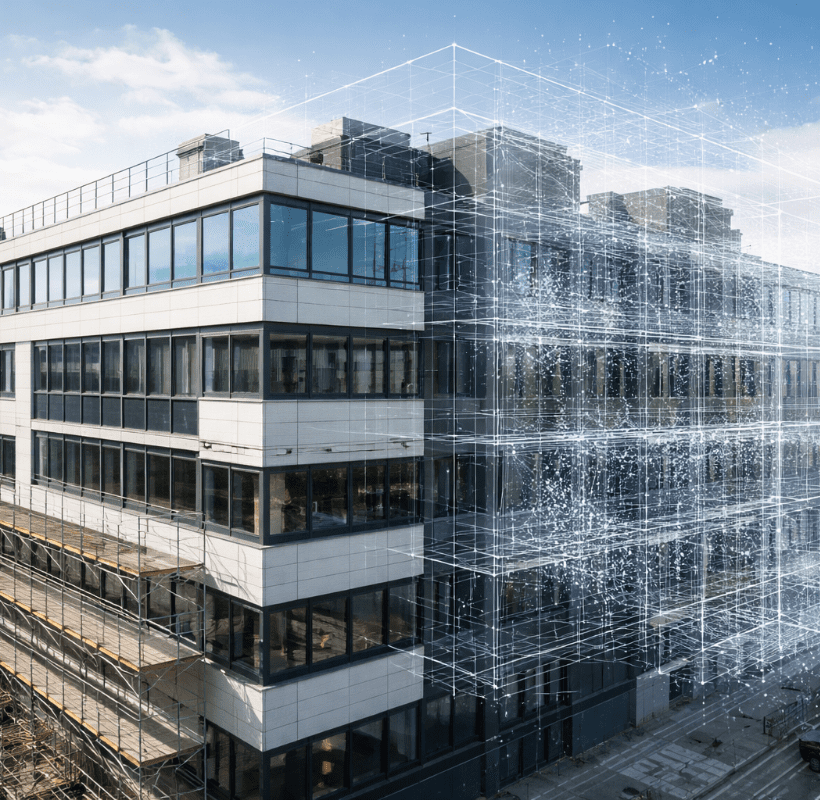
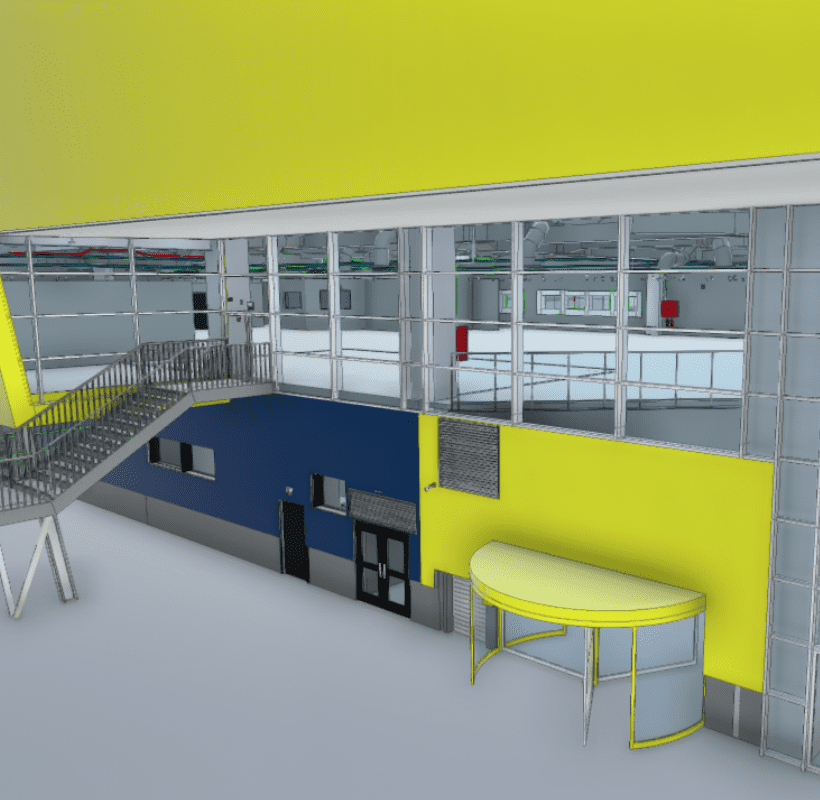
In this context, Xplorate Group developed a complete 3D model of the IKEA Băneasa building, including both the structure and all MEP systems. The result is a highly accurate digital replica of the entire space.
3D scanning plays an increasingly important role in managing large buildings, providing a detailed and up-to-date view of the space. Without real field data, intervention decisions rely on assumptions, increasing the risk of errors and additional costs.
This technology enables the digital representation of all structural and technical elements and can be used directly for design, verification, and space management.
What is the value of such a project? In renovation or expansion works, the 3D model allows quick identification of areas that require adjustments, without disrupting store operations. It also significantly reduces analysis time and eliminates unnecessary site visits.
The Xplorate team created a 3D BIM model of the complex, covering an area of 46,600 square meters. The project resulted in a detailed digital replica, providing an accurate representation of the entire building. In practice, any technical decision can be tested digitally before being implemented on site.
The deliverables included a color point cloud, georeferenced in the Stereographic 1970 system, generated from a total of 2,532 scan stations, a virtual tour based on the point cloud for detailed space exploration, and a 3D BIM model (digital twin) containing all structural, architectural, and MEP (Mechanical, Electrical, Plumbing) elements.
On the architectural and structural side, the model includes elements such as structural walls, curtain walls, metal structures, slabs, suspended ceilings, interior stairs, fire escape stairs, escalators, doors, and windows.
The MEP component covers essential systems required for the store’s operation, including fire detectors, alarms, sockets, switches, surveillance cameras, interior and exterior lighting systems, hot and cold water pipelines, ventilation systems, and cable trays for both high and low current systems.
The 3D BIM model provides a clear and usable visualization for decision-making, supporting maintenance, reducing costs and risks, and improving planning and integration of future changes.
Among the project’s challenges was carrying out the work without disrupting the store’s commercial activity. At the same time, the team managed a large number of scan stations across an extensive area. The large volume of collected data had to be aligned and processed within a limited timeframe, without compromising the quality of the deliverables.
“The ability to scan and model large-scale spaces such as IKEA Băneasa demonstrates Xplorate’s expertise in high-complexity projects. The use of the RTC 360 scanner ensured data accuracy and a high capture speed in the field,” said Adrian Trifan, Managing Partner at Xplorate Group.
The team of land surveyors coordinated the project over a period of four months, with experience in 3D laser scanning, 3D modeling, and point cloud post-processing.
“At IKEA, we value partnerships that help us build better, faster, and more sustainably. In the IKEA Băneasa project, Xplorate Group provided us with a complete digital replica of the store.” George Stanciu, Market Communication Coordinator, IKEA
The collaboration between IKEA Băneasa and Xplorate Group highlights the importance of using technology in the management of modern buildings.
Through this project, Xplorate Group strengthens its position as a trusted partner in delivering digital solutions for large-scale infrastructure, demonstrating that when applied correctly, technology reduces risks and accelerates decision-making in complex projects.